
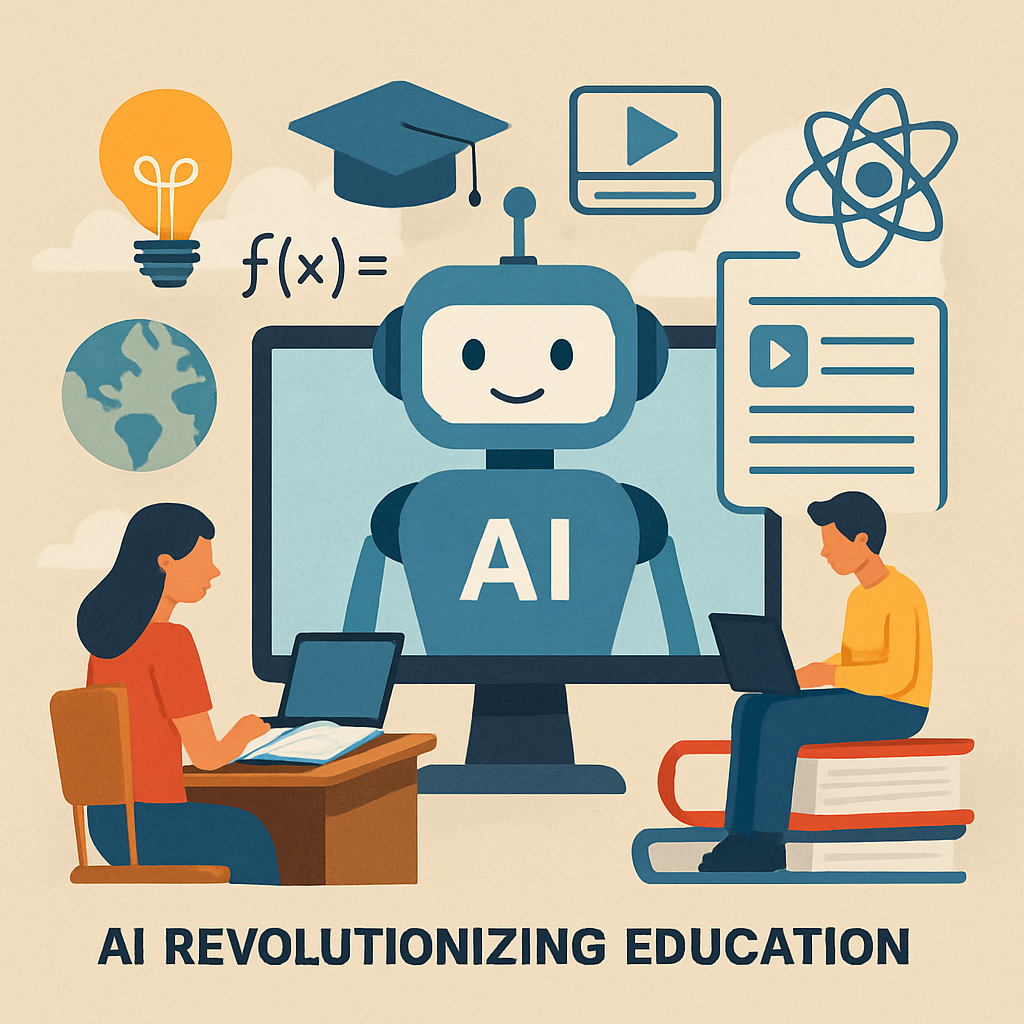
Top Free AI Tools for Students That Actually Work

Artificial Intelligence is redefining the educational landscape by introducing personalized learning experiences, automating administrative tasks, and providing real-time feedback. These advancements make learning more accessible and tailored to individual needs, fostering an environment conducive to academic success.

Personalized Learning

AI tools can adapt to a student’s learning pace and style, offering customized resources and exercises. This personalization ensures that students are neither overwhelmed nor under-challenged, promoting a more efficient learning process. The adaptability of AI means that it can provide recommendations for further reading or exercises that are specifically tailored to an individual’s strengths and weaknesses. This helps in creating a unique learning journey for each student, ensuring they achieve their academic goals in a manner that is best suited to their personal learning preferences.

Moreover, AI-driven platforms often incorporate multimedia elements such as videos, interactive quizzes, and simulations, which cater to different learning styles. For visual learners, AI can recommend video content, while for those who learn better through reading, text-based materials are suggested. This multi-faceted approach keeps the learning process engaging and varied, preventing monotony and enhancing information retention.

The continuous analysis of student interactions with AI tools also helps in identifying learning patterns and predicting future performance. By analyzing this data, AI can provide insights into which areas a student might struggle with and proactively suggest interventions. This proactive support system ensures that students receive help before a minor issue becomes a significant hurdle.

Administrative Efficiency

AI streamlines administrative tasks such as grading and scheduling, allowing educators to focus more on teaching. This efficiency not only benefits educators but also enhances the overall learning experience for students. Automated grading systems can handle multiple-choice and short-answer questions swiftly, providing immediate results and freeing up educators to concentrate on more complex assessments that require human judgment.

Scheduling tasks, too, are simplified through AI, which can optimize timetables by considering various factors such as student preferences, faculty availability, and resource allocation. This leads to more balanced schedules that minimize student stress and maximize learning opportunities.

Additionally, AI can assist in managing communication between students, parents, and educators by automating routine inquiries and providing timely updates. This ensures that all parties are well-informed and reduces the administrative burden on educational institutions, allowing them to allocate resources more effectively.

Real-time Feedback

AI-driven platforms provide immediate feedback on assignments and quizzes, enabling students to identify areas for improvement quickly. This instant feedback loop helps in reinforcing learning and addressing knowledge gaps promptly. The immediacy of AI feedback is crucial in keeping students motivated, as they can see the direct impact of their efforts and make necessary adjustments in real-time.

Real-time feedback also allows for a deeper understanding of the material, as students can immediately apply corrections and insights to their work. This ongoing process of refinement leads to a more profound mastery of subjects, as students are encouraged to learn from their mistakes and continuously improve.

Furthermore, AI feedback is often accompanied by detailed explanations and suggestions for further study, guiding students toward additional resources that can aid in their understanding. This comprehensive approach ensures that feedback is not just about highlighting errors but also about providing constructive guidance to support learning.

Top Free AI Tools for Students

Here, we delve into some of the most effective free AI tools that cater to various educational needs.

1. Grammarly

Grammarly interface

Grammarly is an AI-powered writing assistant that enhances writing by checking for grammatical errors, suggesting style improvements, and providing vocabulary enhancements. Its real-time feedback helps students refine their writing skills, making it an invaluable tool for essay writing and research papers.

Key Features

  • Grammar and spell checker
  • Style and tone suggestions
  • Plagiarism detector

Grammarly offers a user-friendly interface that integrates seamlessly with word processors and web browsers, making it accessible for students across various platforms. This ease of use ensures that students can receive writing assistance wherever they are, whether they’re drafting an email, writing a paper, or engaging in online discussions.

The tool’s advanced algorithms not only identify errors but also provide suggestions for improvement, helping students develop a more polished writing style. By offering explanations for each correction, Grammarly educates users on grammar rules and writing conventions, promoting long-term skill development.

For students concerned about originality, Grammarly’s plagiarism detector compares their work against an extensive database, highlighting potential issues before submission. This feature is particularly valuable for maintaining academic integrity and ensuring that work is both original and properly cited.

2. Khan Academy

Khan Academy leverages AI to offer personalized learning experiences across a myriad of subjects. It provides practice exercises, instructional videos, and a personalized learning dashboard, making it an excellent resource for students seeking to strengthen their understanding of various topics.

Key Features

  • Personalized learning dashboard
  • Wide range of subjects
  • Interactive exercises

Khan Academy’s AI-driven platform adapts to the learning pace and style of each student, providing customized recommendations for further study. This personalization helps students focus on areas where they need the most improvement, ensuring efficient learning.

The platform covers a broad spectrum of subjects, from mathematics and science to humanities and economics, making it a versatile resource for students of all disciplines. Its extensive library of instructional videos is designed to explain complex concepts clearly and concisely, aiding in comprehension and retention.

Interactive exercises reinforce learning by providing immediate feedback and hints, enabling students to test their understanding and apply new knowledge. This hands-on approach ensures that students actively engage with the material, promoting deeper learning and long-term retention.

3. Quizlet

Quizlet study set

by Brett Jordan (https://unsplash.com/@brett_jordan)

Quizlet uses AI to help students memorize and understand concepts through interactive flashcards, quizzes, and games. It adapts to the user’s learning pace, ensuring efficient study sessions that cater to individual learning preferences.

Key Features

  • Customizable flashcards
  • Adaptive learning modes
  • Study games and quizzes

Quizlet’s AI engine personalizes the learning experience by identifying the user’s strengths and weaknesses, allowing students to focus on areas that need improvement. This targeted approach maximizes study efficiency and ensures that time spent studying is productive.

The platform’s customizable flashcards enable students to create their own study materials tailored to specific subjects and topics. This flexibility allows for a more personalized learning experience, as students can organize information in a way that makes sense to them.

Quizlet’s adaptive learning modes and gamified features, such as study games and quizzes, make learning enjoyable and engaging. By incorporating elements of play into study sessions, Quizlet helps students maintain motivation and retain information more effectively.

4. Wolfram Alpha

Wolfram Alpha is a computational knowledge engine that uses AI to provide answers to factual queries. It is particularly useful for students in STEM fields, offering step-by-step solutions and explanations for complex mathematical problems.

Key Features

  • Step-by-step problem solving
  • Extensive database of factual information
  • STEM-focused support

Wolfram Alpha’s powerful algorithms can handle complex calculations and provide detailed explanations for mathematical problems, making it an invaluable resource for students in science, technology, engineering, and mathematics (STEM) disciplines. By breaking down problems into manageable steps, the tool helps students understand the underlying concepts and processes involved.

The platform’s extensive database of factual information covers a wide range of subjects, from physics and chemistry to history and geography. This wealth of knowledge ensures that students can find accurate and reliable information to support their studies.

For students seeking to deepen their understanding of complex topics, Wolfram Alpha offers insights and examples that illustrate key principles and applications. This comprehensive approach helps students grasp challenging material and apply their knowledge in practical settings.

5. Duolingo

Duolingo employs AI to facilitate language learning through engaging, gamified lessons. It personalizes the learning experience by adjusting the difficulty of exercises based on user performance, making language acquisition both effective and enjoyable.

Key Features

  • Gamified language lessons
  • Personalized learning paths
  • Extensive language options

Duolingo’s AI-driven platform adapts to the user’s proficiency level, ensuring that lessons are neither too easy nor too difficult. This personalized approach helps learners progress at their own pace, building confidence and motivation along the way.

The platform’s gamified lessons incorporate elements of play, such as point scoring and levels, to make language learning fun and engaging. This innovative approach encourages regular practice and helps learners develop their skills in a relaxed and enjoyable environment.

With a wide range of language options available, Duolingo offers learners the opportunity to explore new languages and cultures. This diversity of choice ensures that students can find a language that interests them and pursue their linguistic goals with enthusiasm and dedication.

How AI Tools Enhance Learning

Improved Accessibility

AI tools break down barriers to education by providing resources that are accessible to all students, regardless of their geographical location or financial constraints. This democratization of knowledge empowers students worldwide to pursue their academic interests. Online platforms can reach students in remote areas, providing access to quality education that might otherwise be unavailable. This expanded reach ensures that students from diverse backgrounds have equal opportunities to learn and grow.

Additionally, many AI tools offer free or low-cost access to educational resources, making them an affordable option for students with limited financial means. This cost-effectiveness allows students to access high-quality learning materials without the burden of expensive textbooks or tuition fees.

Moreover, AI-driven resources often include features such as translations and captions, making them accessible to students with disabilities or those who speak different languages. This inclusivity ensures that all learners, regardless of their circumstances, can benefit from the educational opportunities provided by AI.

Enhanced Engagement

The interactive nature of AI tools keeps students engaged, making learning more enjoyable and less of a chore. This increased engagement translates to better retention of information and improved academic performance. By incorporating multimedia elements such as videos, games, and simulations, AI tools create dynamic learning environments that capture students’ attention and maintain their interest.

Interactive features such as quizzes, flashcards, and gamified lessons encourage active participation, motivating students to take an active role in their learning. This involvement fosters a deeper understanding of the material and promotes critical thinking skills.

The use of AI also enables adaptive learning, where content is tailored to the individual needs of students, keeping them challenged without causing frustration. This personalized approach ensures that students remain engaged and motivated, as they feel supported and encouraged to achieve their academic goals.

Efficient Time Management

AI tools help students manage their time more effectively by automating routine tasks and providing instant feedback. This efficiency allows students to focus on more critical aspects of their education, such as critical thinking and problem-solving. By automating tasks such as grading and scheduling, AI frees up valuable time that students can allocate to more meaningful activities.

Instant feedback from AI tools enables students to quickly identify areas for improvement and make necessary adjustments, streamlining the learning process. This immediate response helps students avoid wasting time on ineffective study methods and instead focus on strategies that yield better results.

AI tools also offer personalized study plans and recommendations, helping students prioritize their workload and manage their time efficiently. By providing insights into which areas require more attention, AI enables students to plan their study sessions more effectively, ensuring that they make the most of their available time.

Challenges and Considerations

While AI tools offer numerous benefits, students should be mindful of the potential challenges associated with their use.

Data Privacy

The use of AI tools often involves the collection and analysis of personal data. Students should be aware of the privacy policies of these tools and ensure their data is handled responsibly. It is essential to read and understand the terms of service and privacy policies of AI platforms to know how personal information is collected, used, and shared.

Students should also consider using tools that prioritize data security and offer robust privacy protections, such as encryption and anonymization. These measures can help safeguard personal information and prevent unauthorized access or misuse.

Furthermore, students should be cautious about sharing sensitive information and consider using pseudonyms or other privacy-preserving methods when interacting with AI tools. By taking these precautions, students can protect their privacy while still benefiting from the advantages of AI technology.

Over-reliance on Technology

While AI tools can significantly enhance learning, they should not replace fundamental educational practices. Students must strike a balance between leveraging technology and developing traditional study habits. It is important to recognize that AI is a tool to supplement learning, not a substitute for critical thinking and problem-solving skills.

Students should continue to engage in traditional learning activities such as reading, writing, and discussion, which are essential for developing a well-rounded education. These activities help build foundational skills that are crucial for academic success and lifelong learning.

By combining the benefits of AI with traditional study methods, students can create a balanced approach to learning that maximizes their potential. This integration ensures that students develop a comprehensive skill set that prepares them for future challenges and opportunities.

Conclusion

AI tools are revolutionizing the educational sector by offering personalized, efficient, and engaging learning experiences. By integrating these top free AI tools into their study routines, students can enhance their academic performance and prepare for future challenges. As AI continues to evolve, its role in education will undoubtedly expand, promising even more innovative solutions to support student success.

In conclusion, embracing AI for education is no longer a choice but a necessity. By choosing the right tools and using them effectively, students can unlock their full potential and achieve their academic goals. The future of education lies in the synergy between human intelligence and artificial intelligence, creating a learning environment that is dynamic, inclusive, and empowering for students worldwide.